Reclaiming the Miles: How Heat-Not-Burn Technology Is Transforming the Daily Commute for Adult Switchers
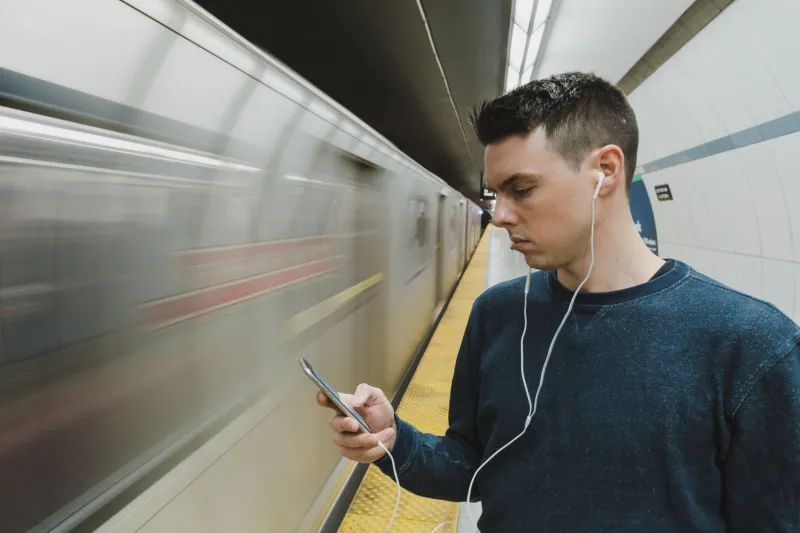
The American commute is a study in lost potential. According to data from the U.S. Census Bureau, the average one-way commute in the United States runs approximately 27 minutes—meaning the typical working adult spends nearly an hour each day in transit. For adult tobacco users who smoked cigarettes, that hour was historically shaped by a particular kind of friction: the inability to smoke on public transit, the awkward ritual of smoking in a parked car before entering a garage, the frantic search for a designated smoking area before boarding a flight.
For adult switchers who have moved to IQOS heated tobacco, that friction is largely gone. What has replaced it is something more valuable: time that feels genuinely usable again.
The Logistics Problem That Cigarettes Created
To appreciate what changes with heat-not-burn, it helps to map the logistical tax that cigarettes imposed on the daily commute.
Consider the adult smoker taking the Chicago L or the New York City subway. No smoking is permitted on any urban transit system in the United States. The practical result was a compressed ritual: a rushed cigarette before descending to the platform, the lingering smell that followed the smoker into the train car, and the social awareness of being identifiable as a smoker in close quarters. On the return trip, the same sequence in reverse.
For drivers, the calculus was different but equally limiting. Smoking in a personal vehicle—while legally permitted in most states—leaves persistent odor embedded in upholstery, creates ash management challenges, and raises concerns about resale value. Many adult smokers found themselves avoiding it, which meant the car commute became a nicotine-abstinence window rather than a managed experience.
Flyers faced perhaps the most acute version of this problem. Airport smoking lounges have largely disappeared from American terminals. The result: adults who smoked cigarettes were navigating security lines, gate areas, and boarding processes in a state of enforced abstinence—often for hours.
What IQOS Changes, Practically Speaking
Heat-not-burn technology does not eliminate all of these constraints—regulations governing where IQOS may be used vary by jurisdiction and venue, and adult users are responsible for understanding and complying with applicable rules. What it does change is the underlying character of the experience.
There is no combustion, no ash, and no smoke. The aerosol produced by IQOS dissipates quickly and does not carry the persistent, fabric-penetrating odor associated with cigarette smoke. For adult switchers who use IQOS in their personal vehicles, the difference in the car environment is frequently described as dramatic.
"My car used to smell like a cigarette," said one adult switcher from Atlanta who commutes approximately 45 minutes each way. "I tried to manage it—air fresheners, keeping the windows down—but it never really worked. After switching to IQOS, that entire problem went away. The car smells like a car again. That sounds small, but it changes how I feel about the whole commute."
Beyond the olfactory dimension, the absence of ash and the elimination of the need to find a disposal point for cigarette butts simplifies the in-vehicle experience considerably. Adult IQOS users report being able to manage the device with one hand without the attention demands of a lit cigarette.
The Productivity Dividend: What Adults Are Doing With Reclaimed Time
The more significant story may be what adult switchers are accomplishing during commute time that previously felt unavailable.
For subway and bus commuters, the elimination of the pre-boarding smoking ritual—often five to ten minutes each way—adds up to nearly two hours per week. Over the course of a working year, that represents more than 80 hours. Adult switchers interviewed for this piece described using that reclaimed time in ways that have compounded meaningfully.
One adult switcher from Brooklyn, who works in financial services, described starting a personal finance podcast during his reclaimed morning commute time. "I used to stand outside the station smoking before every morning train. That was 15 minutes, minimum. When I switched to IQOS, I suddenly had that time back on the platform. I started listening to audiobooks, then podcasts, then eventually started recording my own. It launched a side project I never would have had the bandwidth to start otherwise."
A Los Angeles-based adult switcher who drives 50 minutes each way described a different but equally concrete benefit. "I used to feel guilty about smoking in my car, so I would white-knuckle the drive and then smoke immediately in the parking structure before going into the office. That whole sequence was stressful. Now I manage my nicotine on my own terms during the drive, I arrive calmer, and I go straight to my desk. My manager has actually commented on it."
The Airport Experience, Specifically
For adult tobacco users who travel for work, airports represent one of the most acute points of friction in the entire smoking experience. The near-total elimination of designated smoking areas from major American airports—including Hartsfield-Jackson, O'Hare, LAX, and JFK—means that adult smokers historically faced multi-hour abstinence windows during travel days.
Adult IQOS switchers who travel frequently describe a meaningful reduction in travel-day stress as a direct consequence of switching. The urgency that once defined pre-flight behavior—the sprint to find a smoking area, the calculation of whether there was enough time before boarding—has been replaced by a calmer, more deliberate approach to the travel window.
This does not mean IQOS may be used freely in airports or on aircraft; regulations and venue policies govern this, and adult users must comply with them. What it means is that the psychological relationship to travel time changes when the extreme logistical pressure of cigarette management is removed from the equation.
Commuting as a Wellness Window
Perhaps the most underappreciated shift reported by adult IQOS switchers is the qualitative change in how the commute feels as a period of time.
When the commute was organized around the logistics of cigarette smoking, it was inherently reactive—defined by what could not be done, where one could not go, and what social friction had to be managed. For adult switchers, the commute has become something more intentional: a window for audiobooks, language learning apps, calls with family, or simply a period of genuine mental decompression.
The miles have not changed. The roads and the trains and the terminals are the same. What has changed is the adult's relationship to the time they represent—and for a growing number of IQOS users across the United States, that shift is proving to be one of the more consequential benefits of their decision to switch.