From Combustion to Precision: How Heat-Not-Burn Technology Is Redefining the Tobacco Experience
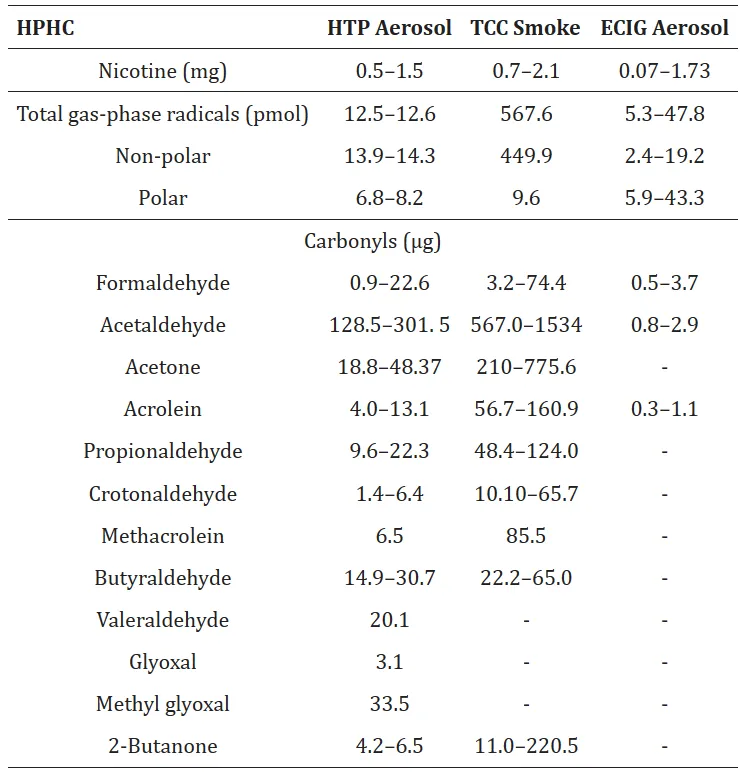
Photo: Swapna Upadhyay, Mizanur Rahman, Gunnar Johanson, Lena Palmberg, Koustav Ganguly, CC BY 4.0, via Wikimedia Commons
For decades, the act of smoking has been defined by one unavoidable chemical event: fire. When a cigarette is lit, the tobacco at its tip burns at temperatures exceeding 1,800°F, triggering a cascade of chemical reactions that produce thousands of compounds—many of which are harmful. For adult smokers who have long accepted this as simply the nature of the experience, it may come as a surprise that an entirely different approach now exists. Heat-not-burn technology does not eliminate tobacco; it reimagines how tobacco is engaged, and the distinction is rooted in fundamental chemistry.
What Actually Happens When Tobacco Burns
To appreciate what heated tobacco devices do differently, it helps to understand what conventional cigarettes actually do. Combustion is, at its core, a rapid oxidation reaction. When tobacco burns, it does not simply release the compounds already present in the leaf. The extreme heat creates entirely new chemical substances through a process called pyrolysis—the thermal decomposition of organic material. Carbon monoxide, tar, formaldehyde, benzene, and hundreds of other byproducts are not naturally present in tobacco; they are manufactured by the act of burning it.
This is the core problem that heat-not-burn engineering was designed to address: not tobacco itself, but what combustion does to it.
The Role of Precise Temperature Control
Heated tobacco devices like IQOS operate on a deceptively simple principle: deliver enough heat to release nicotine and tobacco flavor, but stop well short of the threshold where combustion begins. In practice, this requires extraordinary engineering precision.
IQOS, for example, heats its specially designed tobacco sticks—known as HEETS—to a carefully controlled maximum of approximately 662°F (350°C). This temperature is sufficient to produce a nicotine-containing aerosol from the tobacco, but it remains significantly below the ignition point of tobacco, which occurs at roughly 932°F (500°C). The gap between those two numbers is not incidental; it is the entire point.
At sub-combustion temperatures, the tobacco is heated rather than incinerated. The complex pyrolysis reactions that generate the most harmful byproducts simply do not occur. The result is an aerosol—not smoke—that carries nicotine and tobacco flavor without the carbon monoxide and tar that define cigarette smoke.
How the Heating Mechanism Works
Modern heated tobacco devices achieve this temperature precision through one of two primary mechanisms: blade heating and induction heating.
In blade-based systems, a thin ceramic or metal heating element is inserted directly into the tobacco stick. The blade heats rapidly to a preset temperature, warming the tobacco from the inside out. The device's electronics continuously monitor and regulate the blade temperature, ensuring it never exceeds the combustion threshold.
Induction-based systems take a slightly different approach, using an electromagnetic field to heat a susceptor—a metallic element embedded within the tobacco stick itself—from within. This method offers even more uniform heat distribution across the tobacco column.
Both approaches share a common goal: thermal consistency. Unlike a burning cigarette, where the combustion zone migrates unpredictably and generates highly variable temperatures, a heated tobacco device maintains a stable thermal environment from the first draw to the last.
Heat-Not-Burn vs. Vaping: An Important Distinction
Adult smokers evaluating their options often wonder how heated tobacco devices compare to e-cigarettes. While both technologies avoid combustion, they are fundamentally different products.
Vaping devices heat a liquid solution—typically containing nicotine, propylene glycol, vegetable glycerin, and flavorings—to produce a vapor. There is no tobacco involved whatsoever. Heated tobacco devices, by contrast, use actual processed tobacco. For many adult smokers, this distinction matters considerably. The sensory experience of real tobacco—its texture, its aroma, its draw resistance—is difficult to replicate with a liquid formulation.
In this sense, heat-not-burn occupies a genuinely distinct category: it is not a tobacco product that burns, nor is it a tobacco-free vapor product. It is processed tobacco, experienced through heat rather than flame.
What the Research Suggests
Scientific scrutiny of heated tobacco products has grown substantially over the past decade. Philip Morris International, the manufacturer of IQOS, has submitted extensive research to the U.S. Food and Drug Administration, which in 2020 authorized IQOS as a Modified Risk Tobacco Product—specifically permitting the claim that the device produces significantly lower levels of harmful chemicals compared to cigarettes.
Independent researchers have also examined the aerosol chemistry of heated tobacco devices. Studies published in peer-reviewed journals have generally confirmed that the aerosol produced by IQOS contains substantially reduced concentrations of many toxicants found in cigarette smoke, including carbon monoxide, acrolein, and formaldehyde. It is important to note that "reduced" does not mean "absent," and heated tobacco products are not risk-free. However, for adult smokers who are not going to quit nicotine entirely, the toxicant reduction profile represents a meaningful distinction.
Why This Matters for Adult Switchers
For adult smokers weighing a transition away from conventional cigarettes, the science of heat-not-burn technology offers something that marketing language alone cannot: a rational basis for the decision. The aerosol you inhale from a heated tobacco device is chemically different from cigarette smoke—not by accident or marketing sleight of hand, but because the underlying physics of how the tobacco is processed are fundamentally different.
At IQOSS Store, we believe that informed adults deserve to understand the technology behind the products they consider. Switching is a personal decision, and the best decisions are grounded in genuine understanding. The engineering inside a heated tobacco device is not magic—it is precision applied to a familiar experience, with meaningful consequences for what ends up in the aerosol you breathe.
For the curious adult smoker, that precision is worth understanding.